




Satellite Phones & Radios

24

Cell coverage runs out sooner than most people expect. Twenty miles offshore it is already gone. An hour into a canyon it disappears without warning. And the morning after a hurricane, a phone showing five bars the night before shows nothing at all, because the towers it depended on lost power along with everything else.

A satellite phone does not use towers. It connects to a spacecraft, which is why it still works in all three of those places.

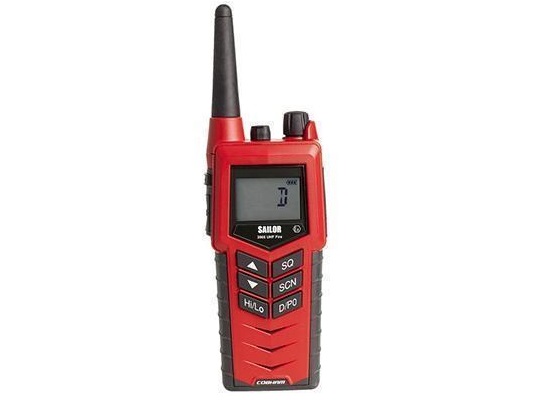
Satmodo sells handheld satellite phones on the Iridium, Inmarsat and Thuraya networks, satellite push-to-talk radios for crews who need one channel instead of a dozen separate calls, and UHF two-way radios for close-range work on a site or a vessel. If you need data as well as voice, the hotspot devices are a separate class of product, and how much each one can actually carry varies a lot.

Every handset ships with its airtime already activated, so the phone works the first time you switch it on. If you are not sure which network reaches where you are going, that is the question to settle first. You can also call 1 (619) 238-0205 and we will size it with you.

4.8 / 5
★★★★★
Verified Shopper Approved reviews
Airtime activated before it ships
Same-day dispatch on stocked kits
US-based satellite specialists
Buy or rent, on every network

Start here

Shop satellite phones and radios by network

The network decides three things before you have even chosen a handset: where the phone works, what a minute costs, and how fast any data will be. Pick the network first. The handset choice inside a network is usually much easier.

Need data as well as calls? The Iridium GO, the GO! exec and the other hotspot devices create a Wi-Fi network your phone can join. Be clear about what that means: the GO carries voice, text, and the data that specific weather and email apps use. It is not broadband and it will not load a web page. For most people off the grid that is still the right answer, because getting a forecast and a short email out is the actual job.

Match the device to the job

What will you use it for?

In practice the right handset is decided by where you are going and who needs to hear you, not by which one has the better spec sheet.

When the grid goes down

Cell towers have battery backup measured in hours, not days. In a hurricane or a wildfire they usually fail early, and they fail across a whole region at once, which is exactly when everyone tries to call at the same time. A satellite phone skips all of that, because nothing between you and the satellite is on the ground.

The thing that trips people up is that an emergency phone spends its whole life in a drawer. It has to work on the one day it is needed, a year after anyone last thought about it.

So this choice is usually decided by: standby battery life, and airtime that does not quietly expire while the phone sits unused.

Head to head

Compare the top satellite phones of 2026

Every figure below comes from the manufacturer's own published specification. Where a manufacturer does not publish a figure, the cell says so instead of filling the gap with a plausible number.

Swipe the table sideways to see every column.

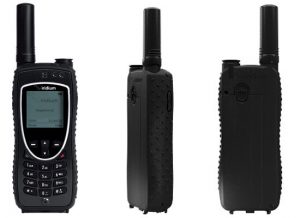
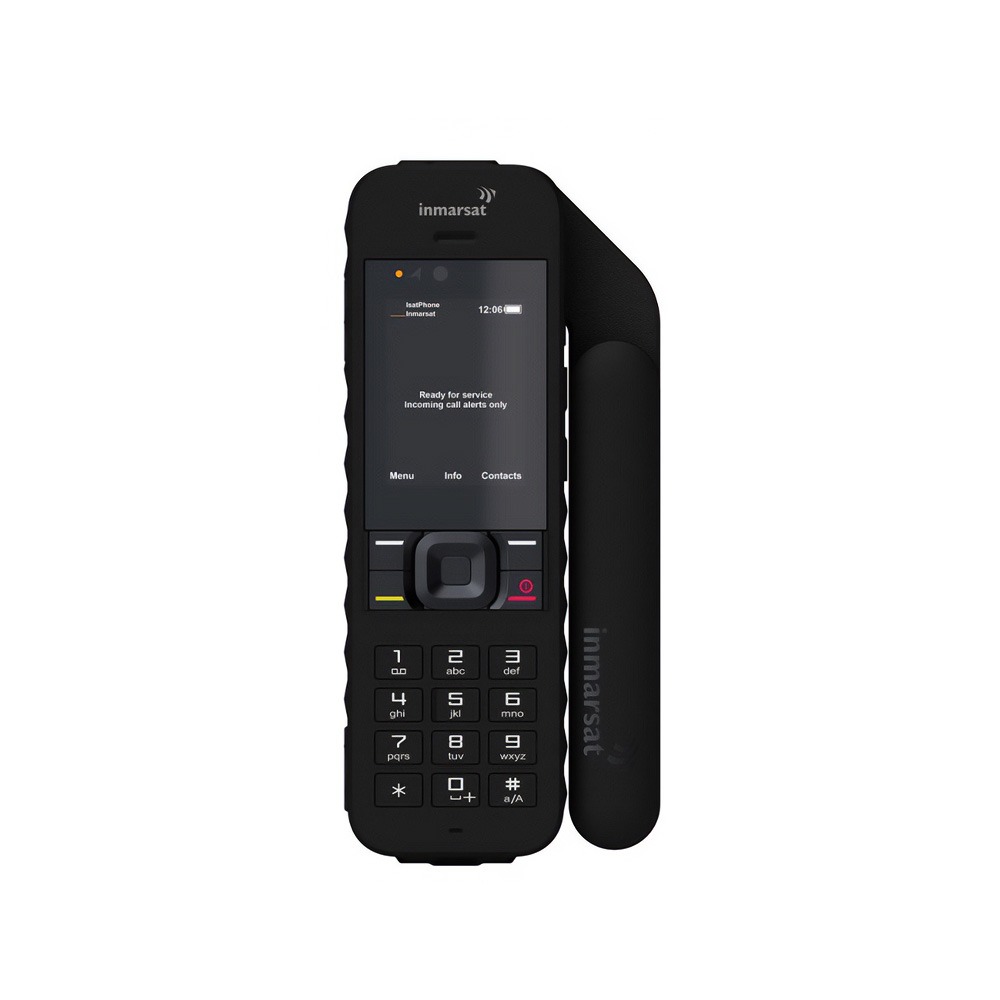
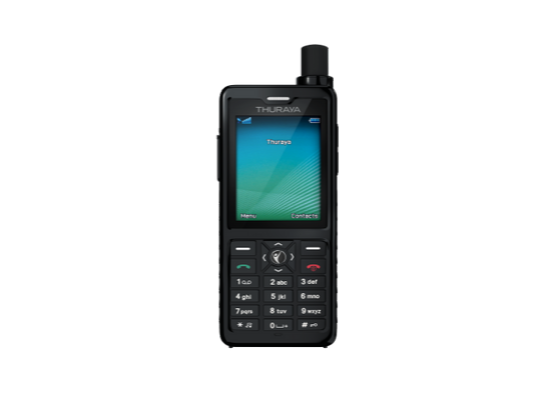
 Inmarsat IsatPhone 2Iridium 9555Iridium Extreme 9575Thuraya X5-Touch
Best forLong trips away from powerDependable global voiceHard use in rough countryRegional work across EMEA and Asia
NetworkInmarsat, geostationaryIridium, low earth orbitIridium, low earth orbitThuraya, geostationary
CoverageNear-global, no polar serviceTruly global, pole to poleTruly global, pole to poleEurope, Africa, Middle East, Asia
Talk time8 hours4 hours4 hoursUp to 11 hours
Standby160 hours30 hours30 hours100 hours
Ingress ratingIP65, plus IK04 impactNot published by IridiumIP65IP67, plus MIL-STD 810G
Dedicated SOS buttonAssistance buttonNoYesYes
GPSYesYesYes, with online trackingYes
Apps and smartphone OSNoNoNoAndroid 7.1.2 with Play Store
 View the IsatPhone 2View the 9555View the Extreme 9575View the X5-Touch

There is no price row here on purpose. Prices live on the product cards and product pages, so nothing on this table can go stale or contradict the cart.

Coverage

Which network reaches where you are going?

This is the decision that matters most and the one buyers most often get wrong. A phone bought on the wrong network is a paperweight in the wrong hemisphere, and no amount of airtime fixes it.

Iridium

Sixty-six satellites in low earth orbit, cross-linked so a call is passed from one spacecraft to the next. Coverage is 100% of the Earth, including both poles and the middle of any ocean.

Choose it when the route crosses polar or open-ocean gaps, or when you cannot say yet where the phone will end up.

Inmarsat

Geostationary satellites giving near-global coverage between roughly 80 degrees north and 80 degrees south. Everything except the polar caps.

Choose it for long trips where battery life matters more than polar reach.

Thuraya

Regional coverage across Europe, Africa, the Middle East, Central Asia and much of Asia, reaching around two-thirds of the world's population.

Thuraya no longer serves Australia. That service ended permanently in 2024 and cannot be restored.

Globalstar

Regional voice across North America, parts of South America, Europe and Australia, with gaps mid-ocean and no polar service.

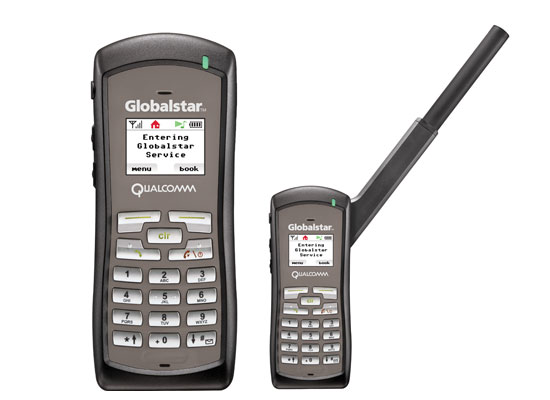
Read the Globalstar guide.

For teams, not individuals

Satellite push-to-talk: one button, everyone hears it

Picture a convoy strung out over forty miles of desert, or a search team working three separate drainages. On handheld radios they lost contact an hour ago. On satellite phones they would be dialling each other one at a time and missing calls.

Satellite push-to-talk solves that. It is a radio channel that happens to run over the Iridium network, so the whole crew sits on one talkgroup with no towers, no repeaters and no range limit. Press the button and everyone hears you in under a second, whether they are on the next ridge or on another continent.

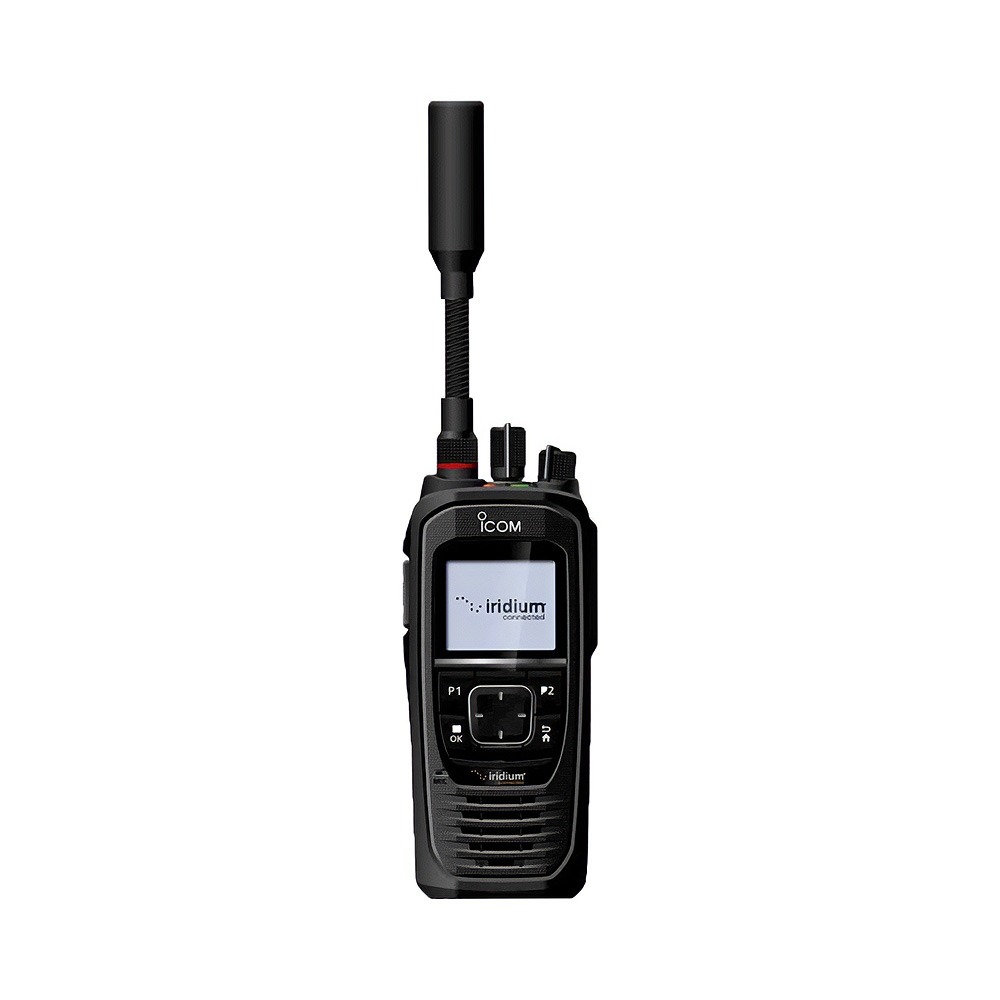
The Icom IC-SAT100 is the handheld version. The IC-SAT100M is the mobile unit for a vehicle or vessel. The Iridium Extreme PTT is a full satellite phone with a talkgroup channel added on top, which suits a team lead who also needs to make ordinary calls.

Before you buy

Should you buy a satellite phone or rent one?

One trip, or one every year. That is genuinely the whole question. Renting covers the handset, the airtime and the accessories for the dates you need them. Buying starts to make sense the moment the phone earns its keep more than once.

Rent one

A single trip, expedition or charter
A season you cannot forecast
A backup unit for one hurricane season
Trying a network before committing to it

Rentals are priced by the week with the airtime included. The kit arrives with two charged batteries, wall and vehicle chargers, international adapters and a case, so there is nothing left to order.

See rental rates

Buy one

More than one trip a year
An emergency kit that stays packed
A crew or vessel that needs one standing by
Anywhere downtime costs real money

Owned handsets run on prepaid or monthly airtime. Prepaid minutes can roll over when you top up before they expire, so a phone that sits unused is not quietly burning money each month.

Compare handsets

Best selling satellite phones and radios

Buyer's guide

How satellite phones actually work

Why a satellite phone works when your cell phone does not
A mobile phone talks to a tower a few miles away, built and powered by a local carrier. A satellite phone talks to a spacecraft, either around 485 miles up in low earth orbit or 22,000 miles up in geostationary orbit. Because nothing in that path sits on the ground near you, the phone does not care whether the local network has power, backhaul or anything else. That is the reason a satellite phone still works the morning after a storm has taken the towers out.
You need a clear view of the sky
Every satellite phone needs line of sight to the satellite, so none of them work indoors, under dense canopy or below deck. Step outside and hold the antenna up and clear. On a geostationary network the satellite sits lower in the sky the further you are from the equator, so at northern latitudes a hill or a building blocks it more easily than it would on Iridium.
Texting, email and data on a satellite phone
Every handset sends and receives SMS, and each network runs a free web portal so anyone can message a satellite phone without owning one. Data through a handset is slow enough that it suits compressed email and weather files rather than browsing. For real connectivity a satellite hotspot is the right tool.
SOS, 911, and what actually happens when you press the button
911 routes to the emergency center nearest the tower you are on, and a satellite phone is not on a tower, so do not rely on it. A dedicated SOS button instead alerts a private coordination center that operates around the clock, passes your GPS position, opens a two-way link, and contacts the rescue authority responsible for where you are.
Prepaid minutes compared with a monthly plan
Prepaid buys a block of minutes with an expiry date and no monthly bill, and unused minutes can roll over if you top up in time. A monthly plan costs less per minute and suits regular use. Emergency kits are almost always prepaid; working crews and vessels are almost always monthly.
Which countries restrict satellite phones
A handful prohibit them outright and others require a permit or registration. India is the one that catches travellers most often. Rules change, so check before you fly with a handset, and ask us if you are not sure what applies to your destination.

Still deciding?

Tell us the region, the trip length and how many people need to talk. We will name one handset and one plan, and we will tell you if the cheaper one is the right one.

1 (619) 238-0205

Satellite specialists, seven days a week

Satellite phone questions, answered

Every answer below opens with the direct answer in the first sentence, then explains it.

How they work

How do satellite phones work?

A satellite phone sends your voice up to a satellite instead of to a cell tower. From there the call either hops across the constellation or relays down through a ground station, and then joins the ordinary telephone network. You can call any normal phone number, and anyone can call you back on yours.

What is the difference between a satellite phone and a cell phone?

A cell phone needs a tower within a few miles, built, powered and maintained by a local carrier. A satellite phone needs no local infrastructure at all, which is why it works at sea, in wilderness and after a disaster. The trade-offs are that it needs open sky, minutes cost more, and data is far slower.

Do satellite phones work everywhere?

That depends entirely on the network you choose. Iridium works everywhere on Earth including both poles. Inmarsat covers almost everything except the polar caps. Thuraya covers Europe, Africa, the Middle East and much of Asia. Globalstar covers North America, parts of South America, Europe and Australia. All four need a clear view of the sky.

Do satellite phones work indoors?

Usually not. The handset needs line of sight to the satellite, so it will not connect from inside a building, under heavy tree cover, or below deck. You either step outside to make the call, or fit an external antenna and a docking station so the antenna sees the sky while the handset stays inside.

Can satellite phones send and receive text messages?

Yes, every handset we sell can send and receive SMS. You can also text a satellite phone from an ordinary mobile, and each network runs a free web portal for sending messages to its handsets. Texts use much less airtime than a voice call, so they are the cheaper way to check in daily.

Can I get internet on a satellite phone?

Not in the way you are picturing. Data through a handset runs at dial-up speeds and suits short emails and weather files, not browsing. The Iridium GO and GO! exec add a Wi-Fi network your phone can join, but they carry voice, text, and the data that specific weather and email apps use. Neither is general internet, and neither will load an ordinary web page.

Can you call 911 from a satellite phone?

Not reliably, and you should not plan on it. The 911 system routes a call to the emergency center nearest the tower you are using, and a satellite phone is not using a tower. Handsets with a dedicated SOS button solve this differently, by contacting a private coordination center staffed around the clock, which then reaches the right rescue service for your position.

How does the SOS button actually work?

Holding the SOS button sends your GPS position and an alert to a 24/7 emergency coordination center, and on most handsets it also opens a two-way voice or text link so you can describe the situation. The center contacts the appropriate rescue authority for wherever you are. It is not the same as calling 911 and it works in places 911 cannot reach.

My phone, my plan, my money

My iPhone already has satellite SOS. Why would I buy a satellite phone?

Because they do different jobs. Consumer satellite messaging on a smartphone sends short emergency texts, in selected countries, when the phone can hold a precise angle on a satellite for a while. A satellite phone makes ordinary two-way voice calls to any number, anywhere its network reaches, for as long as the battery lasts. If your plan is to call your family, your office or a doctor rather than only to signal distress, the phone in your pocket will not do it.

How much does a satellite phone cost to run?

Airtime comes either as prepaid minutes or as a monthly plan. Prepaid suits a phone that lives in an emergency kit, because there is no monthly bill and unused minutes can roll over if you top up before they expire. A monthly plan gives a lower cost per minute and suits anyone making calls most weeks.

Will I be charged for incoming calls and texts?

On most plans, no. Calls to a satellite phone are generally billed to the person making the call, at their carrier's international rate, and incoming texts are usually free to receive. Plans differ, so check the specific airtime before you rely on it.

What are rollover minutes?

Rollover means unused prepaid minutes carry forward into your next period instead of expiring, as long as you top up before the current balance runs out. It matters most for emergency phones, which may go a whole year without a single call and would otherwise waste every minute bought.

Why are satellite phones expensive?

Because you are paying for the constellation, not the handset. A satellite network costs billions to launch and maintain, and it is shared among far fewer users than a cell network. The handsets are also low-volume, ruggedised hardware built to survive conditions ordinary phones never see.

Should I rent or buy a satellite phone?

Rent for a single trip or one season, and buy if you will use it more than about once a year or need it standing by in a kit. A rental arrives with the airtime already loaded and goes back when you are done, so there is no plan to cancel and no hardware to store. See current rental rates.

Choosing, travelling and the law

Which satellite phone is best for international travel?

Iridium, in most cases, because it works in every country and every ocean and there is no coverage map to check before you fly. If your travel stays within Europe, Africa, the Middle East or Asia, a Thuraya handset costs less and adds dual-mode GSM so it uses an ordinary mobile network when one is available.

How long does the battery last?

Between four and eleven hours of talk time depending on the handset, and from 24 to 160 hours on standby. The IsatPhone 2 has the longest standby of anything we sell at 160 hours, which is why it suits long trips without reliable charging. Cold weather shortens all of these figures.

Do satellite phones work on the ocean?

Iridium works on any ocean including polar waters, and Inmarsat works everywhere except the polar caps, so both are suitable offshore. Thuraya and Globalstar only work on water inside their regional footprints, which rules them out for an ocean crossing. A satellite phone complements an EPIRB rather than replacing it.

Can my satellite phone be tracked or intercepted?

Satellite calls are encrypted between the handset and the network, which makes casual interception far harder than on an open radio channel. Handsets with GPS report position when tracking features are switched on, and you control that. Separately, a small number of countries restrict or prohibit satellite phones entirely.

Which countries ban satellite phones?

Several restrict or prohibit them, and India enforces its rules strictly enough that travellers have been detained for carrying one without a permit. Others require registration or a licence. The list changes, so ask us before you travel with a handset to an unfamiliar country and we will tell you what we know.

How fast can I get one?

Stocked kits dispatch the same day when the order comes in early enough, and we activate the airtime before the phone leaves. If you have a departure date, say so when you order and we will work back from it.

Loading...

Buyer’s Guide: Choosing Between Satellite Phones and Radios

Selecting the right communication device depends on where you are going and who you need to talk to. To help navigate our extensive inventory, consider these key differences between the technologies:

Global Satellite Phones vs. Regional Options

If your travels take you to the poles, the open ocean, or across multiple continents, network coverage is your top priority. Iridium satellite phones (like the 9555 and 9575 Extreme) offer 100% global coverage, making them the standard for international trekkers. Alternatively, Inmarsat and Globalstar phones utilize geostationary or orbital satellites that provide crystal-clear voice quality and faster data speeds in specific regions, which is often preferred for users staying within the Americas, Europe, or Australia.

Satellite Push-To-Talk (PTT) for Teams

For groups working together in the field, dialing a phone number for every interaction is inefficient. Satellite PTT radios allow for instant, "one-to-many" communication at the push of a button. Devices like the Icom IC-SAT100 and Iridium Extreme PTT allow dispersed teams—whether they are search and rescue units or oil field crews—to communicate simultaneously over a wide area, bridging the gap between traditional two-way radios and global satellite reach.

Durability and Emergency Features

All the devices in this category are built for the field, but different models offer varying levels of protection. Look for IP65 or IP67 ratings, which indicate resistance to dust and water jets or submersion. Additionally, most modern satellite phones come equipped with a dedicated SOS button (often integrated with GEOS/IERCC response services) and GPS tracking capabilities. These features transform your phone from a simple communication tool into a comprehensive safety beacon that can summon help when it matters most.

Loading...