
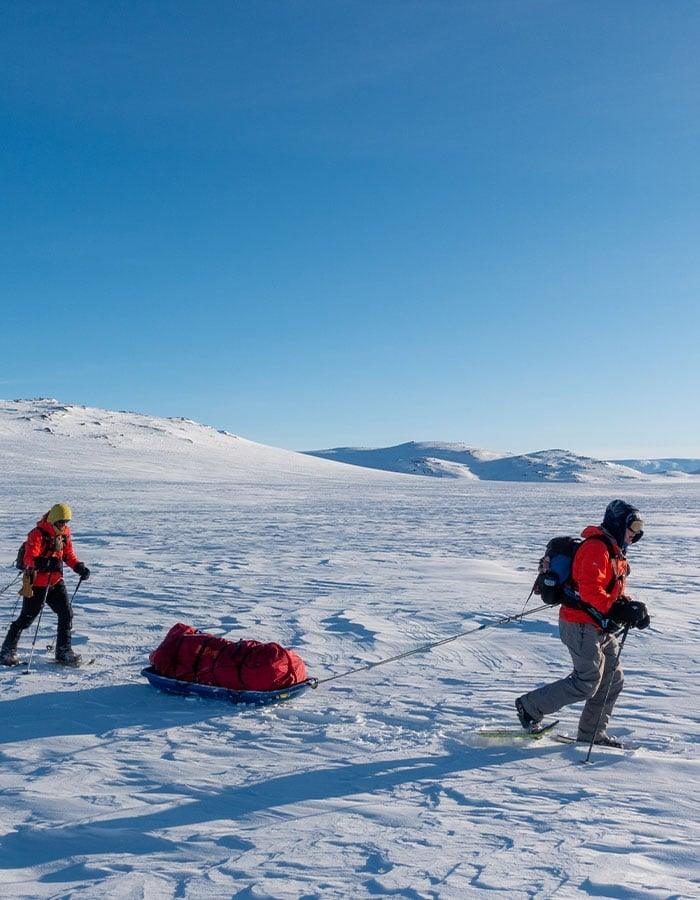

Garmin offers a diverse lineup of satellite communicators, each tailored to different types of adventurers. To help you select the perfect device for your kit, consider how these key features align with your travel style:
Minimalist Communicators vs. Full-Featured GPS Handhelds
If your priority is weight and size, the inReach Mini 2 is the clear choice. Weighing just a few ounces, it pairs with your smartphone for messaging while providing basic tracking on the device itself. However, if you prefer a standalone tool that doesn't rely on your phone's battery, consider the GPSMAP 67i or Montana 700 series. These rugged handhelds feature full QWERTY keyboards (on-screen or button-based), preloaded topographic maps, and larger displays, allowing for complete independent navigation and communication in the harshest conditions.
Two-Way Messaging and Interactive SOS
Unlike simple emergency beacons that send a one-way distress signal, Garmin inReach devices offer two-way communication. In an emergency, this is a game-changer. When you trigger an SOS, you are connected to the Garmin Response center (formerly GEOS). You can text back and forth with rescue coordinators to explain the nature of your emergency ("broken leg" vs. "wildfire"), receive updates on rescue arrival times, and get life-saving advice while you wait. This interactivity reduces panic and drastically improves rescue outcomes.
Seamless Pairing with the Garmin Ecosystem
One of the strongest reasons to choose Garmin is the ecosystem. Your inReach device can connect wirelessly to compatible Garmin watches (like the fēnix or Instinct series), chartplotters, and vehicle navigators. This allows you to view incoming messages or send an SOS directly from your wrist or dashboard without ever digging the device out of your pack. For athletes and pilots, this seamless integration keeps essential safety tools accessible at all times, regardless of the activity.