
Ultimate Resource Guide for Preparing for the Perfect Hiking Adventure
Millions of people take to the outdoors every year in search of breathtaking and unforgettable sights. Hiking is a wonderful way to enjoy beautiful scenery and fresh air while staying active. Hiking can be done on several types of terrain and in different weather conditions, making each trip’s experiences and needs different. It’s those beautiful views that make all the hard work worth it.
To get the most out of your hiking experience, it’s important to prepare accordingly. Making a plan, training appropriately, getting the supplies you need and making safe choices are all important parts of taking a hike from good to great. Read on to find out exactly what you need to do to make your hike the experience the best it can be.
Plan Your Trail Route
Part of the allure of a hiking adventure is finding a beautiful area to make it happen. Which means you’ll want to spend some time researching where you’d like to go (as well as who will come with you). From completing a summit hike up a 14er to navigating rock formations on a desert hike, there is definitely something for every outdoor enthusiast.
If you’re planning a day hike in your area, you’ll be more limited to the type of terrain that’s within a 1-2 hours drive or so. Otherwise, you won’t be sorry making the extra effort to travel to a top destination for a beautiful hike.
Beyond planning where you’ll want to go, you’ll need to determine the following to best prepare:
- Distance – how many miles will you hike?
- Trail type – do you want something easy, medium or expert level? Do you prefer a loop or an out-and-back?
- Elevation – this makes a big difference in how difficult the hike will be, so make sure you understand how much elevation is involved in your hike.
- Time – Make sure you know about how long it will take you based on your fitness. You don’t want to end up in a situation where you’re not back before nightfall. Use this hiking time calculator to help you get an estimate.
- Weather – Will it be cold or hot where you’re headed and will something like snow or ice affect the terrain? This is something you’ll need to think about to prepare as well as pack the right gear.
Here are a few top sites to find your next hiking adventure:
- All Trails allows you to search a database that provides 100,000+ trails to choose from.
- The Hiking Project provides detailed maps to find your next perfect hike.
- Hikes Peak allows you to search trails by name, length, elevation, dog-friendliness and more.
Train So You Are Ready
Now of course you still need to make sure your body can handle an easy 2–3 mile hike on fairly flat terrain. But for the most part, this is something that most in-shape (and even children) can do on a whim without a lot of forethought or training.
But longer hikes where you’re headed to terrain that you’re not used to with mileage that you’ve never done before requires training. Just as you wouldn’t run a race without training, you shouldn’t go on a distance hike that has 1,000+ feet of elevation gain without preparing your body in the right way.
Here are some recommendations for getting the training that you need:
- Strengthen your legs, hips, glutes and core. Here are some great exercises to get started.
- Find elevation where you live to train. Even if you don’t have the right terrain, you can at least start preparing for elevation. Try to find a route in your area that has a lot of hills. You can also bump up the incline on the treadmill to get the same effect.
- Get the mileage in. Start walking every day and focus on increasing your mileage each week by about 10%. Plan for your longest walk to be close to what your hike will be.
Practice on similar terrain. We suggest doing short hikes throughout your training that mimic the type of terrain and elevation you’ll have on your big hike. Be sure to carry your backpack with you just as you will on your longer hike to get used to the extra weight.
Hiking is not the same as walking around your neighborhood, so don’t skip the necessary training to get your body in shape.

Gather Everything You’ll Need in Advance
One of the biggest mistakes you can make when it comes to having an enjoyable hike is not bringing along the right gear. Many times this happens because you wait until the last minute to gather what you think you need only to find out that you’re missing something important. And often by this time it’s too late to make a quick trip to the store.
Instead, you want to utilize a checklist and lay out everything you’ll need at least a few days in advance. This way, you’ll be able to see what you’re missing and you’ll have plenty of time to purchase what you need or reach out to friends to see what you may be able to borrow.
Clothing Essentials
Beyond the obvious, here are some articles of clothing you’ll want to have with you in order to be prepared for the terrain and any weather that may come your way:
- Hiking boots – It’s best to have someone help you get fitted for a pair of hiking boots and then practice using them in advance.
- Hiking socks – Spend the extra money to get a good pair so you’ll avoid blisters and keep your feet comfortable.
- Sunglasses and sun hat
- SPF long sleeve shirt
- Waterproof jacket – You can choose something light or insulated depending on the temperature, but this will keep you dry if it rains.
- Cold weather layers – Weather can often change drastically as you go up in elevation. You may be warm in the beginning but cold at the summit, so bring items like a sweatshirt, hat and gloves.
Gear
To stay safe as well as have what you need to make the hike as enjoyable as possible, there are some essential pieces of gear:
- Directional tools – Don’t rely on your cell phone GPS since it may not work. Bring a compass, map, and a satellite communicator with GPS such as the Garmin inReach Explorer+.
- Backpack – Be sure it’s large enough to hold everything you’ll need.
- Trekking poles – You’ll need these if you’re navigating rocky and steep terrain.
- Satellite Phone for Hiking – Many hikes place you out of cellular range. A satellite phone keeps you safe and connected. You can even rent one if you only need it temporarily.
- Extra batteries – Always bring a backup for any electronic devices.
- Whistle – Many backpacks come with these. You’ll want to have one to use as an alert in case you get into trouble.
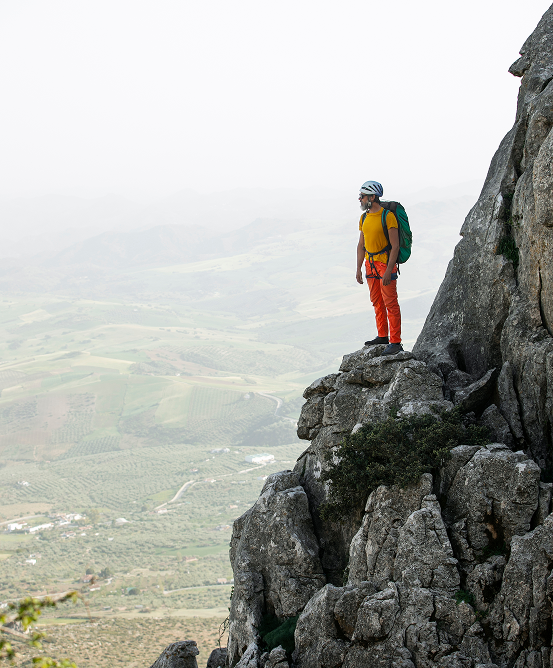
- Some hikes will also necessitate a helmet. Don’t ever skip this if it’s recommended for the type of hike you’ll be doing, such as a craggy climb with loose rocks.
Download the full hiking checklist
here.
Hydration and Food
Long hikes can be exhausting which means you need plenty of food and water. The longer the hike, the more you’ll need. I always like to consider what I think I’ll need and then throw in extra snacks on top of that as well as more water. This will ensure you have what you need in case your route takes longer or something unexpected happens. It’s always better to be overly prepared.
According to Section Hiker, 16 ounces of water per hour is a good rule of thumb. If it’s warmer, you’ll need more. Bring water purification tablets as a backup in case you need to drink natural water from a lake or stream.
Take Safety Precautions
Many people skip the proper safety steps because they assume they will be just fine. And though this is most likely true, it’s the type of thinking that will get you into trouble. As they say, expect the best, but prepare for the worst. Here’s what we recommend:
1. Let someone know where you will be
It’s important that you let someone know exactly where you plan to be and when. Give them the details of your planned route, including when you plan to leave, how long you think the hike will take you, and when you plan to be back.
Of course, we may misjudge at times how long a hike will take us, so to avoid worrying anyone, be sure to leave a little wiggle room for when you plan to finish up. As we suggest above, at least one person in your hiking group should have a satellite phone and that number needs to be given to your contact. Be sure to reach out to them if you’re running behind so they know you’re safe.
2. Don’t hike alone
Though it can be nice to be out in the wilderness with no one to bother you, hiking is something best done with a buddy—especially on long routes where you may not see other people. Hiking alone can be a dangerous decision, even for seasoned hikers, because you simply cannot predict what could happen.
Bring a friend or family member whose company you enjoy. If you want a quiet sensory experience, simply let them know. If you absolutely must go alone, research a trail where you know there will be plenty of people and don’t forget to bring your satellite phone so you always have a dependable line of communication.
3. Stay on your planned route
There are two reasons you need to stick with your planned route:
- You told someone back home exactly where you’d be. If you go off route and don’t return on time, no one will know where to look for you.
- You put yourself at added risk—getting lost or tackling terrain you’re unprepared for is extremely dangerous.
There’s no reason you can’t thoroughly enjoy the hike you already planned. Stick with it.
4. Make smart moves
Along your hike you’ll encounter rocks, branches, steep downhills, and uneven terrain. Don’t try to be “cool” by jumping over obstacles or taking unnecessary risks. The last thing you want is an injury that prevents you from hiking back safely. Making smart choices is the best prevention.
5. Take a break when you’re tired
It can be tempting to push your limits when you’re surrounded by beautiful scenery. Many hikers go past their turnaround point thinking they can handle a few extra miles. But if you haven’t trained for that distance, it can backfire on the return.
Take breaks when needed and don’t push your body beyond what it’s capable of. There’s no shame in turning around early if you feel fatigued. Your safety comes first.
Amazing customer service and product! They are always there when you need
them with anything. Iridium phone kept me connected to my family while I was
traveling for work. Wouldn't do another trip without one. If you are looking
for a reliable product and great prices contact these guys!
Best Satellite Phones for Hiking
Explorer 710
At the forefront of a new era of high speed ultra-portable satellite streaming BGAN terminal, EXPLORER 710 is a sophisticated communication tool for broadcasting and other IP based applications. With guaranteed QoS, the EXPLORER 710 provides dependable on-demand video streaming via satellite.


Iridium 9555 Kit
The Iridium 9555 is the ultimate go-to satellite phone for all off-hikers. If you are looking for a satellite phone for your basic talk and text needs, this is the phone for you.
Top 10 Legendary Hiking Trails You Need to Explore
Hiking Checklist
- Satellite Phone
- First Aid Kit
- Water
- Backpack
- Hiking Boots/Shoes
- GPS
- Jump Starter
- Trekking Poles
- Sunscreen
- And More…
Hiking Resources
Clear Your Doubts
frequently asked
questions
Hiking alone has some good benefits, no doubt, but
is not a risk worth taking, stick to group hiking and it gets the
same benefits that come with solo hiking.
However ensure you hike with competent people because is still not
safe if you hike with incompetent people.
It’s good for you, too. Hiking is a powerful cardio workout that can:
- Lower your risk of heart disease
- Improve your blood pressure and blood sugar levels
- Boost bone density, since walking is a weight-bearing exercise
- Build strength in your glutes, quadriceps, hamstrings, and the muscles in your hips and lower legs
- Strengthen your core
- Improve balance
- Help control your weight
- Boost your mood
- Increase the length of your workouts gradually (use the guidelines above)
- Rest one day every week
- Mix up your workouts
- Vary your training — power hike, run trails, climb hills, take a spin class, or do a circuit workout using a treadmill and elliptical trainer, adjusting the level and incline on both machines
- Basic exercises to begin your training
- Preparing for a beginner or day hike
- The three best exercises to condition for hiking
- Protecting your knees on steep inclines and rocky terrain
- When and how to use trekking poles
- Choosing hiking boots — what to look for
- Backpacking fitness — a 9-week training program
- High-elevation mountain hikes — preparing for altitude
- Thru-hike preparation — physical and mental readiness
At 2mph you can already do 20 miles a day. All you have to do is hike for 10 hours. If lightening your pack allows you to walk faster or longer, then you can get to 30miles per day easily. Hiking lots of miles has only a little bit to do with speed and everything to do with time.
The general rule for how much water to bring when hiking is as follows: Adults: 2 cups (about 1/2 liter) of water for every 1 hour of hiking.