



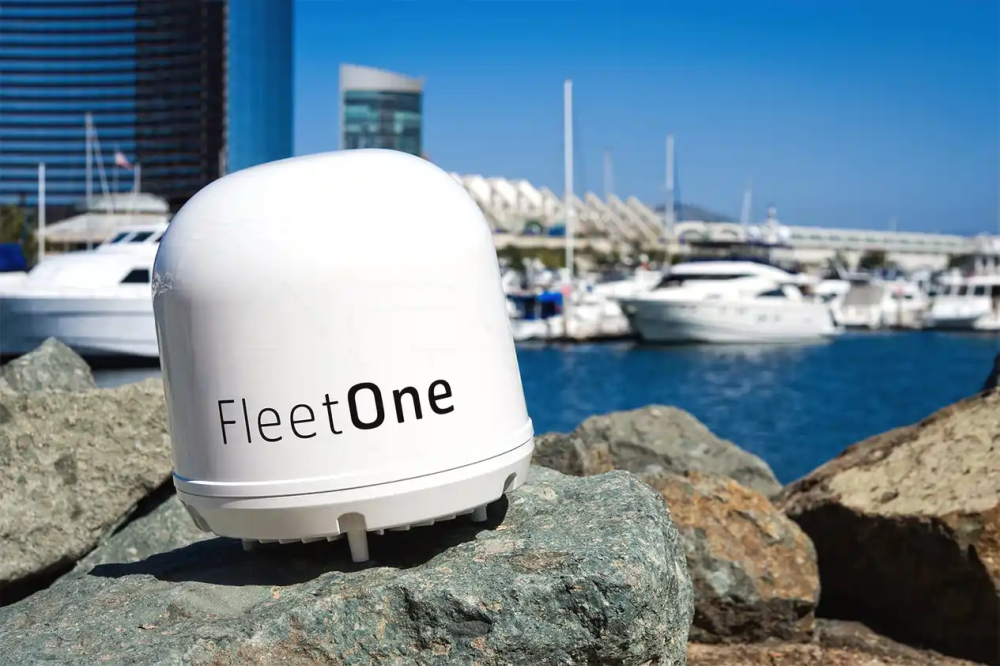
Satellite Internet at Sea: Hardware, Airtime, and Pricing 2025
Satellite Internet for Boats
➜ From small vessel to vast fleet, open sea adventures to large-scale shipping operations, connectivity is essential for day-to-day communication. This requires finding the right maritime satellite internet solution that integrates seamlessly with the needs you or your team require.
➜ For the times that you are docked in the marina or within 5-10 miles offshore, you’ll be able to utilize a typical Wi-Fi connection or obtain a cell signal. But that won’t work when you get farther out to sea which is why satellite internet is a necessity. The other challenge when it comes to internet on a boat is finding a way to maintain the connection even when waves are constantly rocking the boat back and forth or weather becomes severe.
➜ Maritime satellite internet with the proper device is what you will require.
Obtaining Satellite Internet for Your Boat
➜ For those heading out on a short, offshore excursion seeking a way to obtain an internet connection for themselves, a device like the Iridium Go! fits the bill. This portable device turns your own smartphone or tablet into one that supports a range of satellite communication functionality. But it doesn’t account for the movement challenges that arise on a boat.
➜ So for those spending days at sea who require a reliable and faster connection similar to what you’re used to back home, you’re going to need a more robust device designed specifically for the needs required of anyone operating at sea.
➜ The capability of the maritime satellite internet terminals and the networks they operate on have come a long way. By choosing the right fit, you can ensure that you have all the capability you need whether that’s getting the kids on a video call with Grandma or closing an important business deal.
➜ For the high-speed internet you can rely on (because who has time to wait), your choices come down to Global L-Band Broadband or Maritime VSAT. So what’s the difference?
MARITIME-SPECIFIC GLOBAL BROADBAND SATELLITE INTERNET DEVICE OPTIONS
There are extensive options available via global broadband satellite. Whether you choose a device that operates on the unmatched worldwide network of Iridium or the proven network of Inmarsat, you can be confident in staying connected no matter how long you’re on the ocean.
| COMPARE |
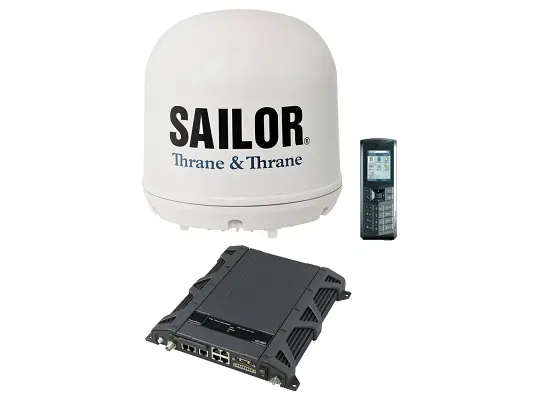 SAILOR 250 FleetBroadband
|
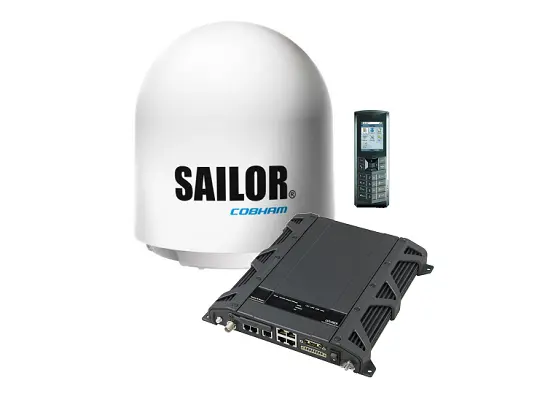 SAILOR 500 FleetBroadband
|
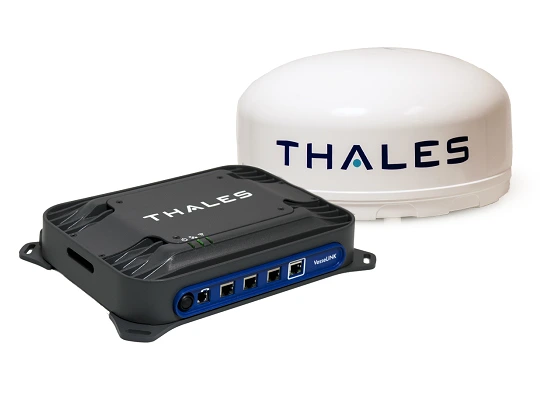 Thales VesseLINK Maritime (Certus)
|
 Intellian C700
|
|---|---|---|---|---|
| Network | Inmarsat | Inmarsat | Iridium Certus | Iridium Certus |
| Standard IP | Up to 284 kbps | Up to 432 kbps | Up to 700 kbps (down) / 352 kbps (up) | Up to 704 kbps (down) / 352 kbps (up) |
| Streaming IP | Up to 128 kbps | Up to 256 kbps | 256 kbps | 256 kbps |
| Multiple Voice Lines | Up to 6 concurrent calls | Up to 9 concurrent calls | 3 dedicated voice channels | — |
| Weight | 26.5 pounds | 35 pounds | 7.05 oz (200g) | 14.3 pounds |
| Size | Height: 10.83 in, Diameter: 12.96 in | Height: 24.80 in, Diameter: 23.81 in | 12 in × 9 in × 3 in | 14.5 in × 11 in |
| Protection Rating | IPX6 sprayproof in all directions | IPX6 sprayproof in all directions | Up to IP67 water and dust protection | Up to IP56 water and dust protection |
| Operational Temperature | -13°F to 131°F | -13°F to 131°F | -22°F to 131°F | -13°F to 131°F |
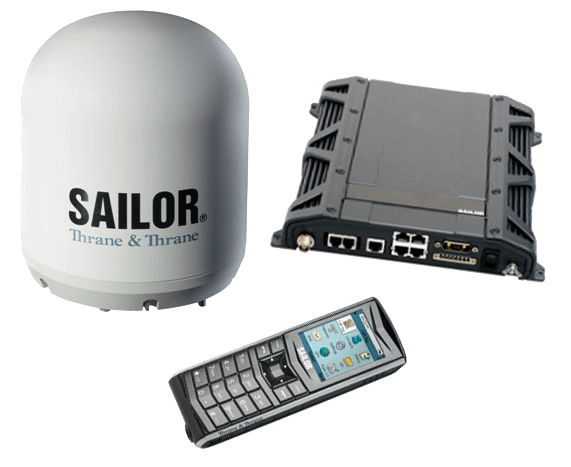
Sailor 250 FleetBroadband
For an affordable, yet high-performing global internet and voice solution for your boat, the SAILOR 250 is a solid choice.
● Features of the Sailor 250 include:
- Operates on Inmarsat’s geostationary network
- Simultaneous access to internet, e-mail, and multiple voice lines
- Fast connectivity between vessel and shore
- 24/7 uninterrupted connection to conduct business or pleasure
- Simple and secure installation
- Easily integrates for tracking and telemetry applications
Sailor 500 FleetBroadband
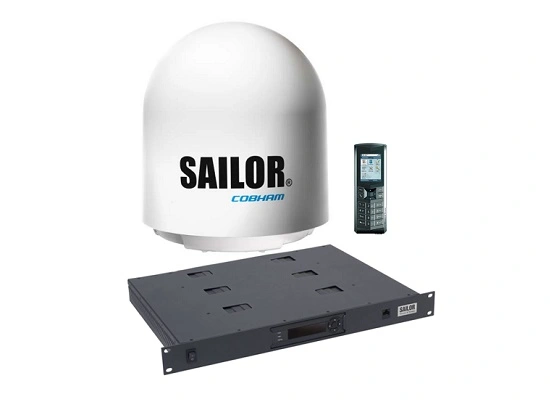
The SAILOR 500 offers a compact and lightweight solution with high-performing capabilities for those with increased connectivity demands.
● Features of the Sailor 500 include:
- Operates on Inmarsat’s geostationary network
- Designed for boats and ships requiring intensive, high-level connectivity
- Efficiency enhancing custom IP solutions
- Broadband data up to 432kbps
- Up to 9 multiple voice lines
- Pre and post paid options for crew calling
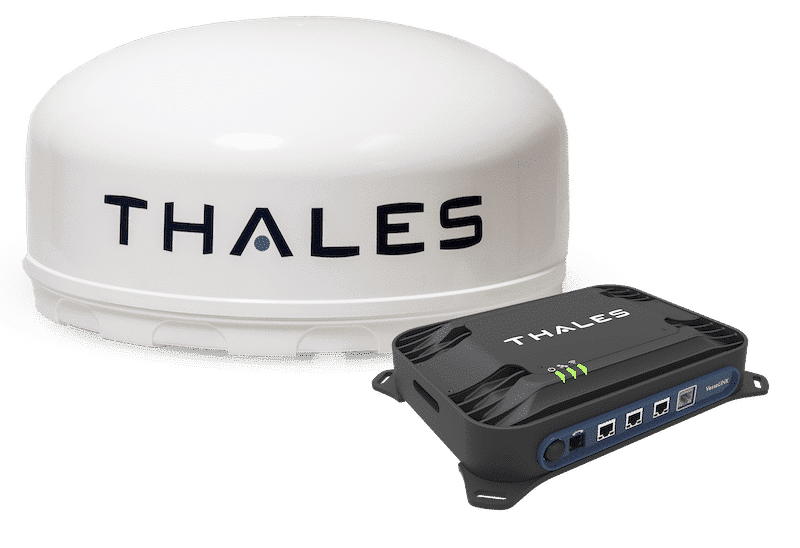
Thales VesseLINK Maritime (Certus)
For a top-tier option at sea that allows for 100% pole-to-pole global coverage, the Thales VesseLINK delivers.
● Features of the Thales VesseLINK Maritime include:
- Commercial solution with a military-grade design
- Suitable for ships or fleets of any size
- Operates using the robust network of Iridium Certus broadband services
- Simple and user-friendly, yet powerful
- Built-in upgradeability for future proofing

Intellian C700
The Intellian C700 enables a variety of applications for those needing the most advanced features.
● Features of the Intellian C700 include:
- The most powerful Iridium Certus terminal available
- Low-earth orbit means stronger signals
- Can be used as the primary communication antenna or as a companion to a VSAT system
- Utilizes a powerful 12 patch phased-array antenna for highest performance delivery
- High power H2 antenna amplifier for fast speed
- Continues excellent coverage even through motion on rough seas
Marine-Specific L-Band Broadband: Fleet Broadband or Iridium Certus
With Global Broadband, you’re able to get fast and powerful internet services at sea as well as almost every other remote area of the world. Fleet Broadband is Inmarsat’s proven maritime satellite services whereas Iridium Certus – Maritime is Iridium’s superior option for communication at sea. Both utilize an L-band operating frequency which is less susceptible to “rain fade.”
➜ Fleet Broadband
- Almost worldwide coverage, except at the poles
- Cost-effective voice and data through a compact antenna
- Terminals operate well in severe weather
- Provides voice and internet services in remote locations (even at sea)
- Streaming capability, enhanced voice services, and SOS emergency calling
➜ Iridium Certus – Maritime
- 100% pole-to-pole global coverage
- Delivering innovative solutions to support crew welfare while optimizing business operations and logistics
- Reliably designed marine terminals with solid-state and virtually maintenance-free antennas
- Top markets include merchant shipping, commercial fishing, leisure, workboats, and coastal government applications
- Find multiple high-quality voice lines, high-speed IP data and safety services in one terminal
➜ Maritime VSAT
Maritime VSAT refers to the use of satellite communication via a “very small aperture terminal” on a ship sailing at sea. For ideal functionality aboard a moving ship, the antenna is stabilized with reference to the horizon and True north to always maintain a clear line to the satellite.
➜ More about Maritime VSAT:
- Ku-band frequencies offering voice and data communication
- High data transfer speeds
- A maritime VSAT antenna typically has a circular antenna that is 2.4 meters or smaller in diameter and is usually concealed with a dome
- Utilizes an outdoor above deck unit (ADU) that includes the antenna and transceiver, and a below deck unit (BDU) inside that controls the unit
- Able to reach a level of bandwidth at broadband-level speeds
- VSAT frequency bands include C-band, Ku-band, and Ka-band, each offering unique capabilities to serve different needs
For a clear idea of how Maritime VSAT looks and operates, Cobham has a great infographic
MARITIME-SPECIFIC GLOBAL BROADBAND SATELLITE INTERNET DEVICE OPTIONS
| COMPARE |
 SAILOR 800
VSAT Ku |
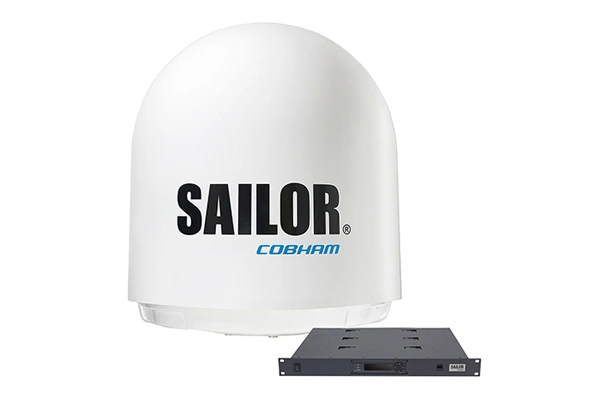 SAILOR 900
VSAT Ku |
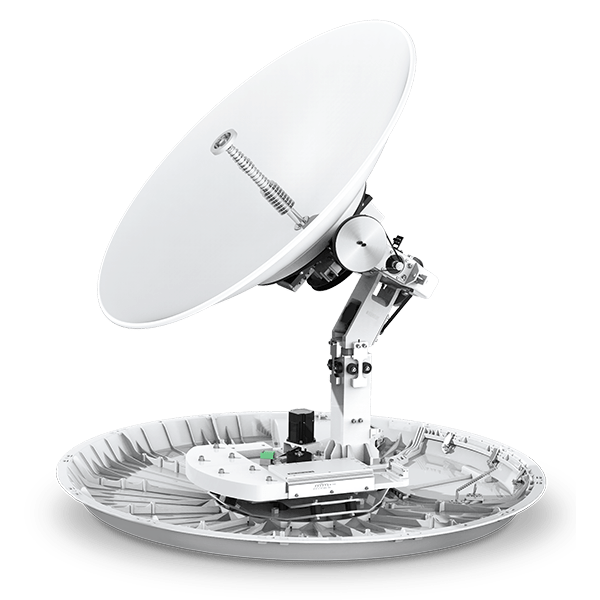 Intellian
V85NX |
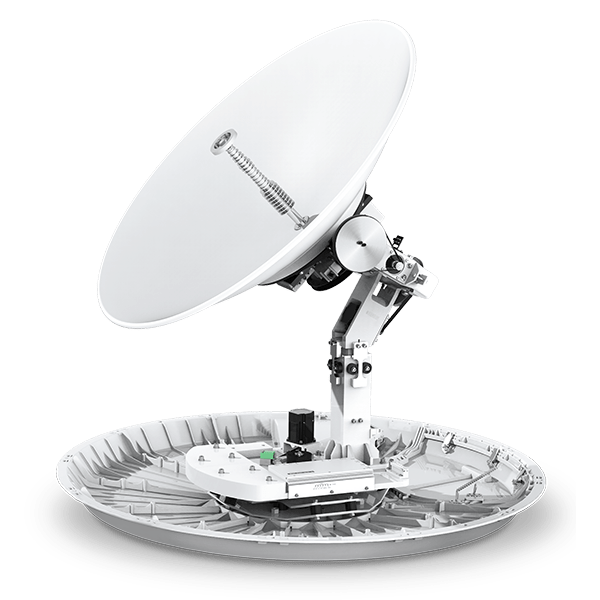 Intellian
V100NX |
|---|---|---|---|---|
| Network | Inmarsat | Inmarsat | NA | NA |
| Block Upconverter (BUC) Power | 6W standard; upgradeable to 20W | 20W extended frequency | 8W, 16W, 25W (optional) | 8W, 16W, 25W (optional) |
| Total System Power Consumption | 330 W peak, 140 W typical (up to 6W BUC) | 370 W peak, 175 W typical (up to 8W BUC) | 256 kbps | 256 kbps |
| Above Deck Unit Weight | 275 pounds | 279 – 287 pounds | 211 pounds | 249 pounds |
| Weight | 26.5 pounds | 35 pounds | 7.05 oz (200g) | 14.3 pounds |
| Reflector Size | 83 cm | 103 cm | 85 cm | 105 cm |
| Ingress Protection (water) | IPx6 sprayproof | IPx6 sprayproof | NA | NA |
| Operational Temperature | -13 degrees to 131 degrees F | -13 degrees to 131 degrees F | NA | NA |
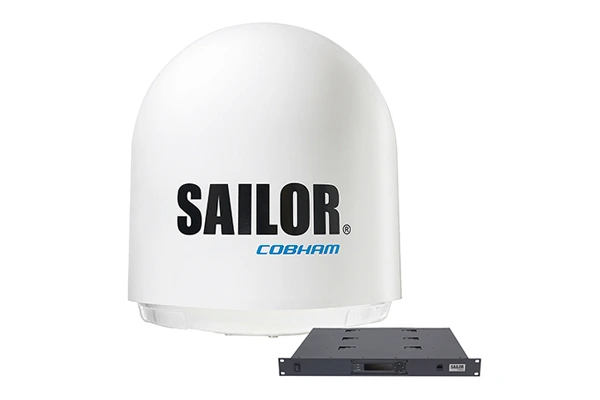
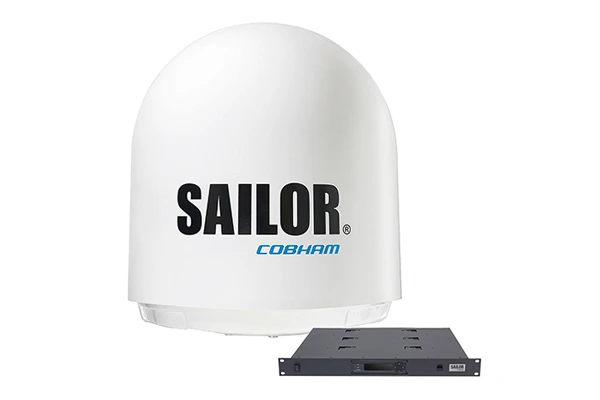
Sailor 800
The SAILOR 800 VSAT Ku is a standardized high-performance 3-axis stabilized Ku-band antenna system. Even though it has a small form factor, it’s been tested and verified that it is equal or higher to other 1m maritime VSAT antenna performance.
● Features of the SAILOR 800 include: include:
- Small, but mighty
- Comes standard with 6W BUC or opt for the 20W high-powered version
- Expect high-quality, reliable communication for a range of vessels from workboats to large yachts
- Low start up costs with easy installation and quick deployment
- Simple dual antenna configuration means your satellite connection is never interrupted
Sailor 900
For increased power, users can turn to the Sailor 900 VSAT High Power.
● Features of the SAILOR 900 include:
- Verified to provide reliable operation downlink and uplink even in high temperature regions
- Meets the demand of more bandwidth and higher data throughput
- 20W extended frequency BUC for top performance and reliability
- Reflector dish and radome primed for the best performance on both Ku- and Ka-band frequencies
- Operates two antenna systems to avoid any obstruction which could cause a service outage
- Switch over between satellite and satellite router in just 20 milliseconds
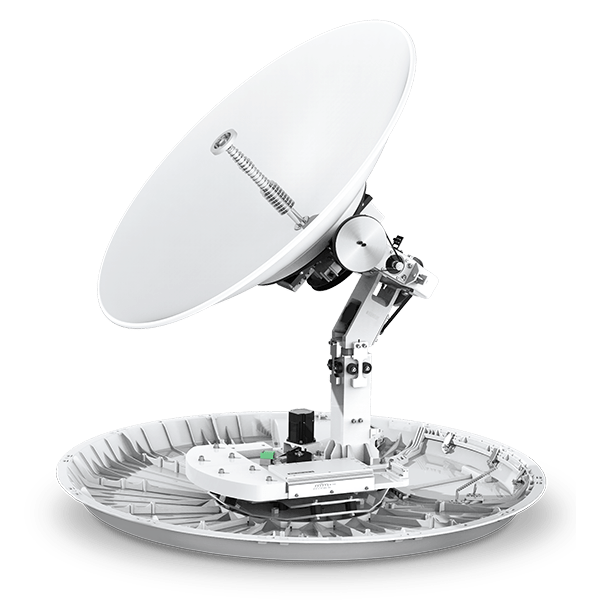
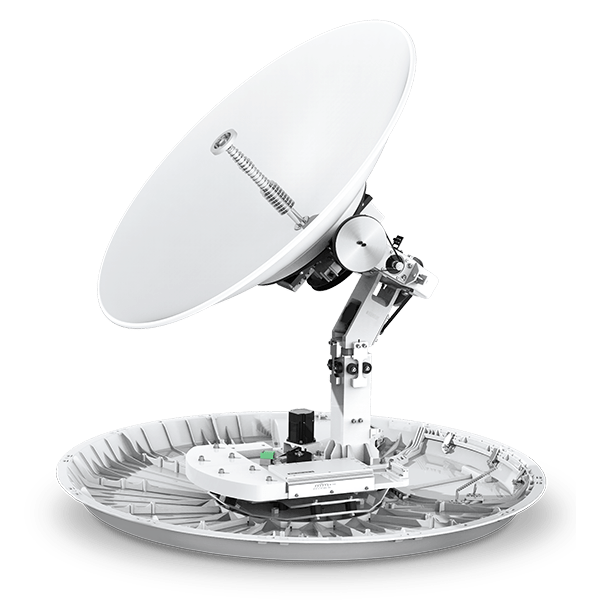
Intellian V85NX
Intellian has introduced to the world the first future proof ku-to-ka-band convertible Sub-1m VSAT. Specifically constructed for maritime operations, this smaller footprint antenna system is perfect to install on smaller vessels.
● Features of the Intellian V85NX include:
- Ideal for commercial ships in oil and gas or mission critical operations
- Quick and easy back-and-forth between Ku- and Ka-band frequencies for optimal performance
- Capable of supporting full 2.5GHz Wide Ka-band networks
- Uniquely designed for reduced installation time and cost
- Future-proofed system ready for whatever might come next
- Highly efficient design outperforms other sub-1m class systems
- Dual antenna system means you’ll never lose your signal
Intellian V100NX
Now meet the all new 1M Ku-Ka- Dual Band VSAT terminal. This revolutionary operation platform enables GEO, MEO, and LEO satellite tracking ensuring future proofing of the device’s antenna. Never worry about replacing your device in a swiftly moving technological world
● Features of the Intellian V100NX include:
- Quick and easy conversion between Ku- and Ka-band operations for maximum performance
- Responsive web user interface
- Completely convertible and upgradeable
- Efficient and preventative maintenance with remote monitoring and user-friendly dashboard
- Meets the unique demands of varying boat sizes and communication needs while at sea
- High level of bandwidth and high speed
Visit Intellian Tech to learn more about the Intellian NX Series
Global Broadband Vs. VSAT Satellite Internet
For reliable internet aboard your ship, you have two main options. This
includes Global L-Band Broadband Service or VSAT (Very Small Aperature
Terminal) Technology.
L-Band terminals allow for a satellite internet connection from virtually
anywhere in the world. A VSAT is a two-way ground (or fixed) station that
sends and receives data via satellite. The terminal is a dish antenna
generally smaller than 3.8 meters in diameter.
Each has the ability to provide users with internet access no matter where
they roam in the world, including the waterways around the globe.
To get an uninterrupted connection and alleviate the unique challenges at
sea, you’ll want to use a marine-specific network. Your options are Marine
Specific L-Band Broadband or Maritime VSAT.
Clear Your Doubts
frequently asked
questions
Unless you are in a marina where you can access a Wi-Fi hotspot or just slightly offshore still in close enough proximity to get a cell signal, you’ll need to seek a satellite option to get internet at sea. By utilizing a robust satellite network such as Iridium or Inmarsat, you’ll able to maintain an internet connection no matter where you sail. A satellite WiFi hotspot such as the Iridium GO! will give you basic functionality at slower speeds. Beyond that, there is a wide range of maritime satellite devices to meet the global communication needs for both individuals on small boats and those operating large fleets.
To set up internet on your boat, you’ll want to research various maritime satellite internet devices. Consider what you’ll the internet for to find a device that has the capability to meet the connection needs you require. Once you’ve chosen a device – you can find an excellent list here – you’ll need to get set up with the network that it operates on. Most high-quality marine systems (that can continue to function properly even on rough seas) will be fixed to your vessel. Once it has been installed and you’ve chosen a marine data plan, you’ll be set to sail!
Mobile satellite internet is more expensive than cellular service or high-speed internet on the ground. The infrastructure is large, complex, and costly to build and maintain. However, in order to get internet in remote areas of the world where obtaining a cell signal is impossible, it’s imperative that you have it to stay connected. You’ll need to first choose and pay for your device which, for maritime internet, ranges from around $800 up to over $50,000. You’ll then pay a monthly fee based upon the amount of megabytes of data you use, which ranges from a couple hundred dollars to thousands of dollars. You can find more Satmodo’s maritime service plans at the following links: Inmarsat FleetBroadband and Certus Marine Service.
For the fastest satellite internet at sea, you’ll want to choose a high-powered maritime device on either the Iridium or Inmarsat network. Not only do these networks give you almost complete coverage wherever you sail, but they also deliver when it comes to fast, reliable internet. Choosing a proper device on these networks is important, too. With the Thales VesseLINK and the Intellian C700, both operating on Iridium Certus, you’ll get download speeds over 700 kbps and upload speeds of 352 kbps. For VSAT technology, consider a device operable at 20W BUC, such as the Sailor 900 for reliable, high performance operation no matter the conditions. A device such as the Intellian V100NX, with its ability to easily convert between ku- and ka-band frequencies will deliver maximum speeds without interruption.
For those that traveling via oceans is a way of life, you need a satellite network can meet the high-speed internet demands you require wherever you end up. Iridium Certus Maritime allows you 100% global coverage – necessary for anyone who may be sailing near the polar regions. Inmarsat, considered the pioneer in mobile satellite communications, offers reliable satellite internet covering 80% of the globe.
Satellite internet can provide high-speed internet connectivity, but the actual speed may vary depending on factors such as network congestion and the specific satellite service provider.
The cost of an internet satellite can vary significantly depending on factors such as the satellite technology, capacity, and the specific provider. Prices can range from a few hundred dollars for consumer-grade equipment to millions of dollars for commercial-grade satellites.
Yes, satellite internet is still available and widely used in many areas, especially in rural and remote locations where traditional wired internet options may be limited or unavailable.
Whether satellite internet is worth it depends on individual needs and circumstances. It can be a viable option for people in areas with limited connectivity, but it may have higher latency and data usage restrictions compared to other types of internet connections.
When it comes to streaming, satellite internet providers such as HughesNet, Viasat (formerly Exede), and Starlink offer plans specifically designed for streaming content, with varying speeds and data allowances. It's best to research and compare the available options in your area to find the most suitable one for your streaming needs.
Yes, satellite internet can be available in various parts of the world. However, the coverage and availability may vary depending on the satellite service provider and the region. Some providers offer global coverage, while others focus on specific areas.
For gaming, satellite internet may not be the optimal choice due to its higher latency compared to other types of connections. However, if satellite internet is the only option available in your area, providers like Starlink and Viasat offer plans with lower latency and higher speeds, which can be more suitable for gaming compared to traditional satellite internet options.