
Satellite Trackers
18 results
Satellite Trackers
18 results
Satellite Trackers
Satellite Trackers, Messengers and Rescue Beacons
Two-way messengers that text anyone from anywhere, one-way trackers that report where people and equipment are, and registered rescue beacons with no subscription at all. Here is how the three classes differ and which one fits the trip you are planning.
What a satellite tracker does when your phone has no signal
A satellite tracker is a small GPS device that sends its position, short messages or a distress alert to a satellite overhead instead of to a cell tower. As long as it can see the sky it works: in a canyon in Utah, 200 miles offshore, on a pipeline access road in North Dakota, or at a trailhead where the last bar of signal dropped an hour ago.
The devices on this page split into three classes that behave very differently once something goes wrong. Two-way satellite messengers let you text anyone and hold a conversation with a rescue coordinator. One-way trackers and asset trackers report position and preset messages out, but nothing comes back. Personal locator beacons (PLBs) and EPIRBs do one job only: they call search and rescue through a government satellite system, and they need no subscription.
Satmodo sells all three from Garmin, SPOT, ZOLEO, ACR and Iridium, and supports them from San Diego. The rest of this page walks through how to choose, then sends you to the right brand page or product.
The three classes of satellite tracking device
Pick the class first, then the brand. The class decides what happens after you press the button.
Two-way satellite messengers
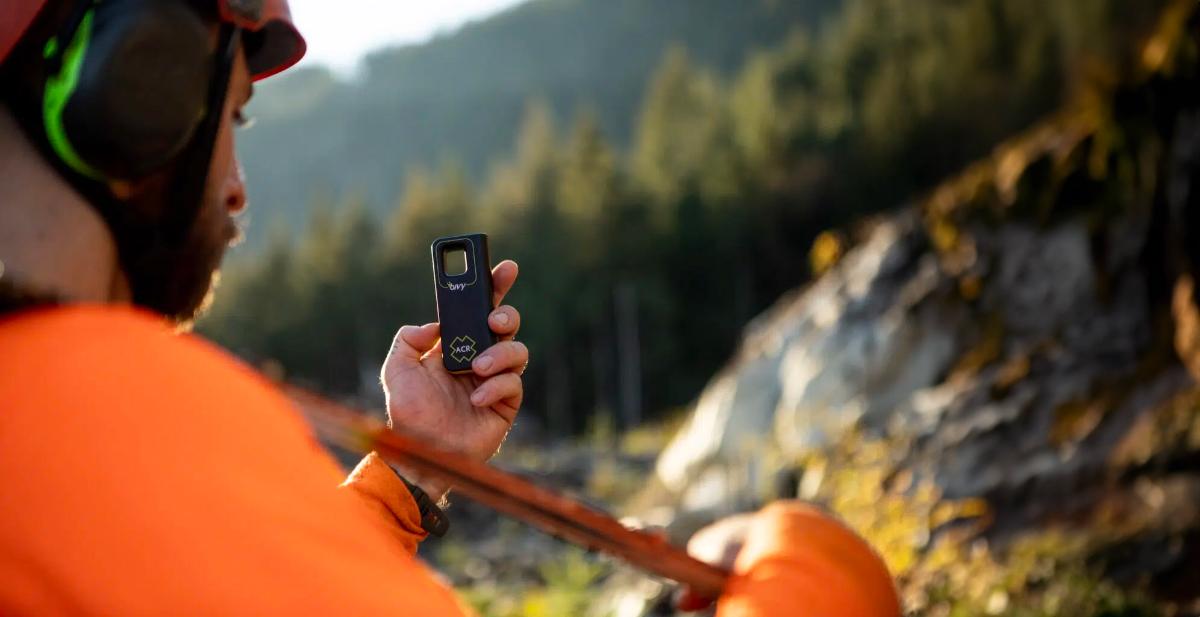
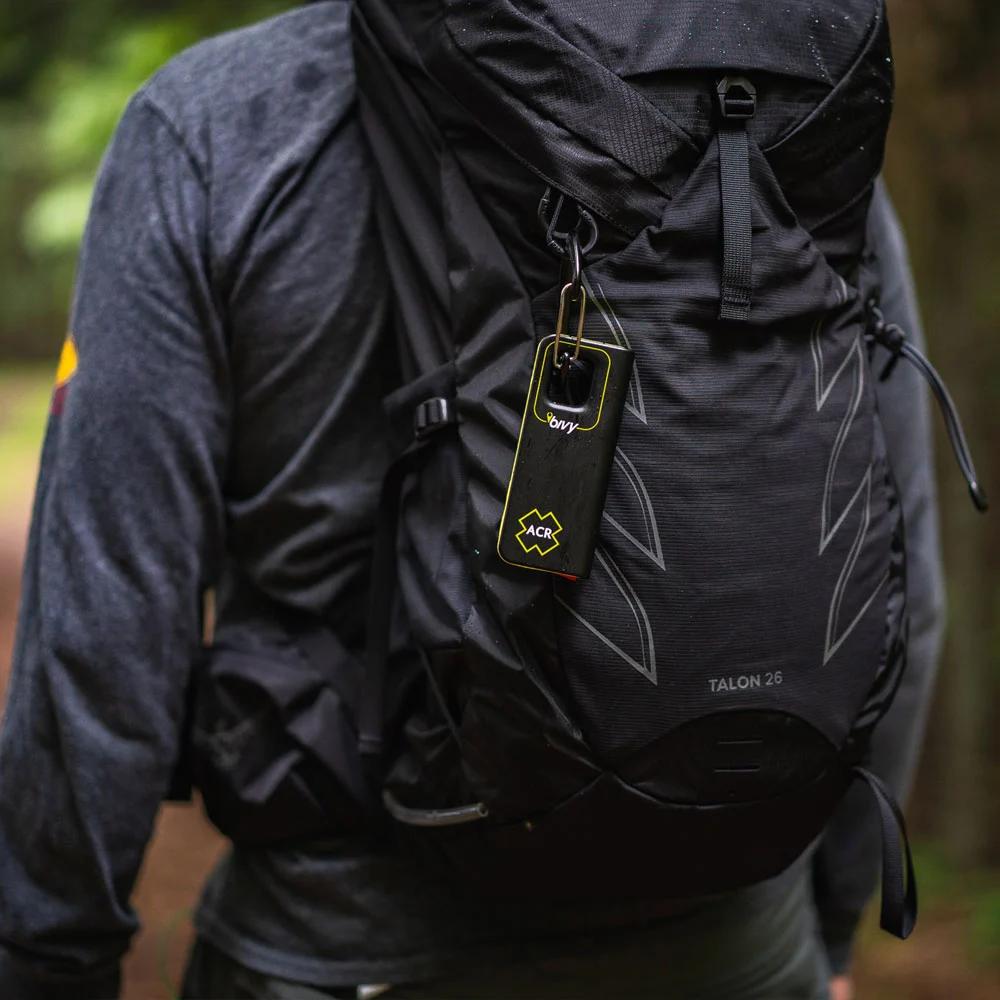
Text friends, a dispatcher or a rescue centre and read their replies. Garmin inReach Mini 2 and Messenger work with or without your phone; ZOLEO and the ACR Bivy Stick pair with your phone for typing and keep SOS and check-in buttons on the unit. All four run on Iridium and need a subscription.
Explore →
One-way trackers and asset trackers
The SPOT Gen4 sends check-in, custom, help and SOS messages with your position but cannot receive a reply. The SPOT SmartOne C and Iridium Edge bolt to a trailer, vessel or generator and report position and sensor status on a schedule for months at a time. The Shout Nano adds encrypted two-way text for professional personnel tracking.
Explore →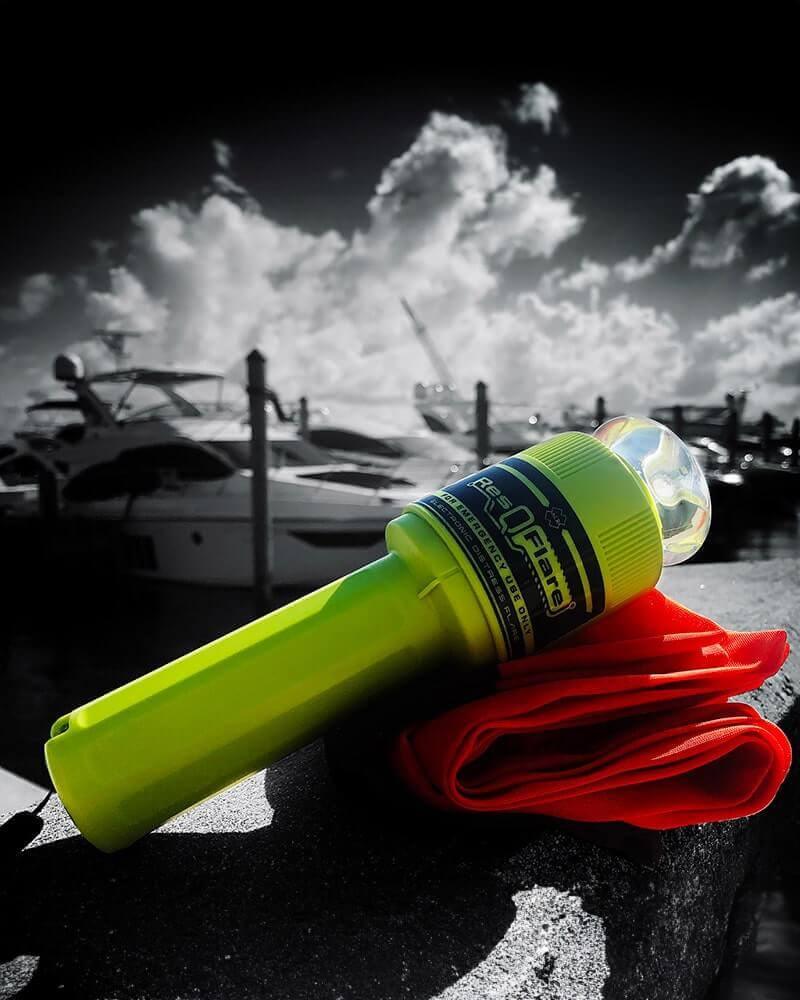
PLBs and EPIRBs: registered rescue beacons
The ACR ResQLink View, ResQLink View RLS and GlobalFix V4 EPIRB send a 406 MHz distress signal through the international COSPAS-SARSAT system straight to search and rescue. No subscription, a battery that lasts years, free registration with NOAA in the US. They cannot send a text and are for emergencies only.
Explore →How to choose a satellite tracker
Four questions settle almost every purchase.
1
1. Do you need to hear back?
If a reply matters, you need a two-way messenger. Telling a rescue coordinator that the injury is a broken ankle and not a heart attack changes what they send and how fast. If people only need to know where you are and that you are fine, a one-way SPOT Gen4 does that. If you only ever want to call for rescue, a PLB does it with no monthly fee.
2
2. Will your phone be part of the plan?
The inReach Mini 2 and inReach Messenger type and read messages on the device, so a dead phone does not end your communications. ZOLEO and the ACR Bivy Stick use your phone's app for typing while their own SOS and check-in buttons still work alone. Less to spend up front, but two batteries that both matter.
3
3. Where are you actually going?
Iridium covers the whole planet, including the poles and open ocean, which is why Garmin, ZOLEO, ACR and Iridium's own devices use it. Globalstar, which SPOT uses, covers North America, Europe, Australia and parts of South America, northern Africa and Asia. For a Colorado elk hunt either works. For a Southern Ocean passage or central Africa, stay on Iridium.
4
4. How long between charges?
Battery figures are quoted at a tracking interval, and a shorter interval drains faster. The inReach Mini 2 is rated up to 14 days at a 10-minute interval; the Messenger up to 28 days; ZOLEO over 200 hours; the Bivy Stick up to 120 hours. The SPOT Gen4 runs on four AAA lithium cells you can swap in the field. A ResQLink PLB waits in a pocket for five years, then runs 28 hours.
Satellite messenger comparison: inReach Mini 2 vs Messenger vs ZOLEO vs SPOT Gen4 vs Bivy Stick
The five personal devices most people choose between. Every figure comes from the manufacturer or the Satmodo product page.
| Garmin inReach Mini 2 | Garmin inReach Messenger | ZOLEO Satellite Communicator | SPOT Gen4 | ACR Bivy Stick | |
|---|---|---|---|---|---|
| Network | Iridium (global) | Iridium (global) plus cellular and Wi-Fi when available | Iridium (global) plus cellular and Wi-Fi when available | Globalstar (regional, see coverage note) | Iridium (global) |
| Two-way messaging | Yes, on the device or via app | Yes, on the device or via app | Yes, via ZOLEO app; dedicated SMS number and email | No, one-way only (check-in, custom, help, SOS) | Yes, via Bivy app; 160 characters per message |
| SOS | Dedicated button, Garmin IERCC 24/7 | Dedicated button, Garmin IERCC 24/7 | Covered SOS button, Global Rescue | SOS button, FocusPoint International | Protected SOS button, Global Rescue |
| Battery | Up to 14 days at 10-min tracking; up to 30 days at 30-min | Up to 28 days at default settings | Over 200 hours | About 1,250 check-in/custom messages per set of 4 AAA lithium | Up to 120 hours plus 2-hour SOS reserve |
| Weight | 3.5 oz | 4 oz | 5.3 oz (150 g) | 5 oz (142 g) with batteries | 3.95 oz (112 g) |
| Water rating | IPX7 | IPX7 | IP68 (1.5 m for 30 min) | IP68 | IP66 |
| Requires a phone? | No; phone optional for easier typing | No; phone optional for group messaging | Yes for typed messages; SOS and check-in buttons work standalone | No | Yes for messaging; SOS and check-in buttons work standalone |
| Subscription | Required, monthly or annual | Required, monthly or annual | Required, monthly plans | Required, auto-renewing | Required, monthly |
Sources: Garmin newsroom; zoleo.com; findmespot.com and the SPOT Gen4 user guide; acrartex.com. ACR now lists the Bivy Stick at IP66 and 112 g where our listing shows IPX7 and 100 g; the manufacturer's current figures are used.
My iPhone already has satellite SOS. Why buy a satellite tracker?
Apple's Emergency SOS via satellite is a real safety feature. On iPhone 14 and later it lets you text emergency services with no cellular or Wi-Fi, provided you are outside with a clear view of the sky and horizon and in one of the roughly twenty countries where it is enabled, and it is free for two years after you activate the phone. For a day hike near home it may be all you need.
It is not a substitute for a dedicated device on a real trip, for five reasons. Battery: your phone is also your camera and your map, while a messenger is rated in days or weeks. Coverage: Apple's service is limited to specific countries; Iridium devices work anywhere on Earth and beacons use a global government rescue system. Who you can reach: the iPhone feature is built around emergency services; a two-way messenger texts anyone, including the friend with the truck at the trailhead. Tracking: a messenger or SPOT leaves a breadcrumb trail that family or a dispatcher can watch, which is how an overdue party gets found before anyone presses SOS. The phone itself: if it is cracked, wet or cold-dead, so is your rescue plan. The inReach Messenger will even push enough charge into a dead phone to send a message.
Keep the iPhone feature, treat it as a backup, and carry a purpose-built device anywhere a mistake could cost you a night out.

The satellite networks behind these devices
The brand on the box matters less than the network it talks to.
Iridium: Garmin, ZOLEO, ACR Bivy Stick, Iridium Edge, Shout Nano
A low-earth-orbit constellation with truly global coverage, including the poles and every ocean. Messengers on Iridium use its Short Burst Data service, which is why messages are short and why they get through on a small antenna. For high latitudes, deep ocean or the developing world, Iridium is the safe default.
Explore →
Globalstar: SPOT Gen4 and SmartOne C
A low-earth-orbit network that relays through ground stations, so coverage is strong across North America, Europe, Australia and parts of South America, northern Africa and Asia, plus offshore margins of those regions, and absent elsewhere. Check the SPOT coverage map before you commit.
Explore →
COSPAS-SARSAT: ACR ResQLink PLBs and GlobalFix EPIRB
Not a commercial network at all. COSPAS-SARSAT is the international government satellite system that listens for 406 MHz distress beacons and routes them to national rescue coordination centres. Nothing to subscribe to; you register the beacon for free with NOAA in the US. The RLS model flashes a confirmation when your alert has been received.
Explore →Subscription or no subscription?
Every two-way messenger and every SPOT device needs an active plan to send a message or an SOS, because a commercial network carries your traffic and a 24/7 response centre answers it. Garmin, ZOLEO, SPOT and ACR all offer monthly plans. A plan that lapsed before a trip is the most common failure we hear about, so set a reminder the day you buy.
PLBs and EPIRBs have no plan. You buy the beacon, register it, and it waits five years (ResQLink) or ten years (GlobalFix V4) until the battery is due. The trade is total: no texting, no tracking, no check-in, only a rescue call. Many of our customers carry both, a ResQLink for the worst day and a messenger for every other day.
Who buys satellite trackers
Patterns from our order desk, each linking to the page that goes deeper.

Backcountry, hunting and overland travel
A two-way messenger clipped to a pack strap or dash. Solo travellers and hunting parties lean to the inReach Mini 2 for on-device navigation; motorcyclists and RV owners like the Messenger's long battery. Add a PLB if you go alone.
Explore →
Boats and commercial vessels
A registered EPIRB for the vessel and a buoyant ResQLink PLB on each life jacket are the baseline. A messenger on top gives weather and a way to tell the harbour you are late. For the vessel itself, a SmartOne C reports position to the office.
Explore →
Lone workers and field crews
Utilities, surveyors, wildfire crews and oil and gas contractors issue messengers so a supervisor sees every worker on one map and every worker can raise help. The Shout Nano adds encrypted tracking and man-down alerting for professional use.
Explore →
Fleets, trailers, containers and equipment
The SPOT SmartOne C and Iridium Edge are bolted on and forgotten: scheduled position reports, movement alerts, sensor inputs, and years of life on lithium cells or line power.
Explore →Shop satellite trackers by brand
Each brand page covers the models, what you need alongside them, and who they are not for.
Garmin inReach and GPS
inReach Mini 2 and Messenger two-way communicators, the original inReach Mini, and the eTrex SE and GPSMAP 276Cx navigators.
Explore →
SPOT by Globalstar
SPOT Gen4 one-way GPS messenger and the SmartOne C asset tracker.
Explore →
ZOLEO
One device, one app, one dedicated phone number and email from cellular to Wi-Fi to Iridium.
Explore →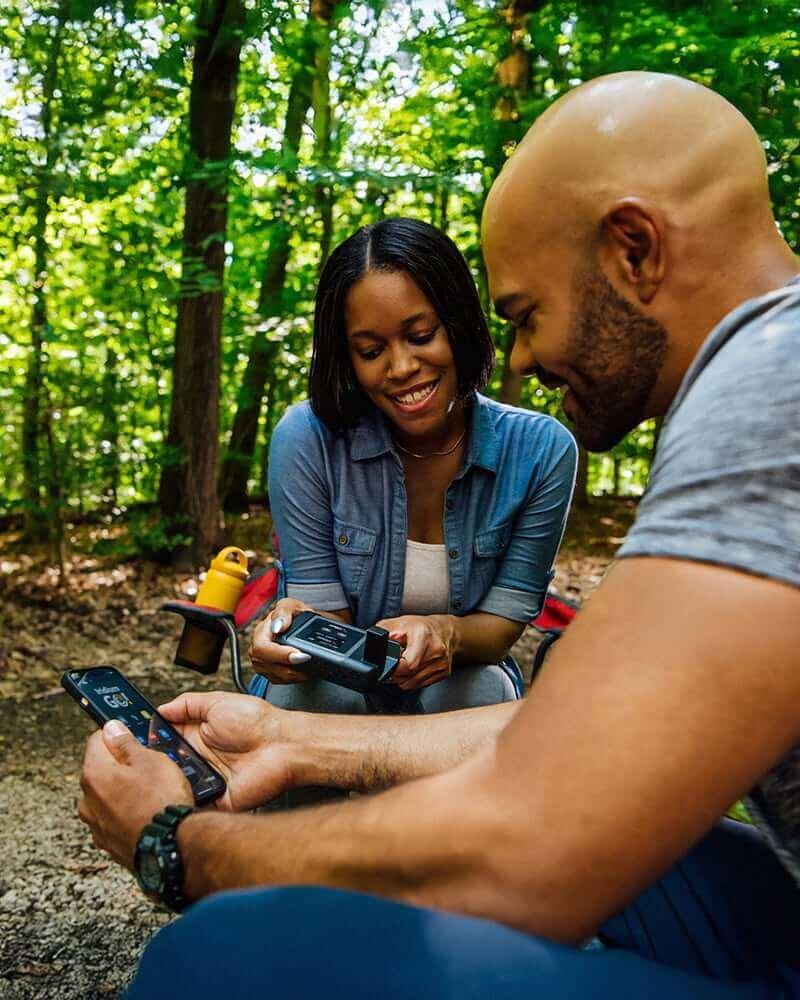
Bivy Stick by ACR
The lightest Iridium two-way messenger we sell, built around the Bivy app, with a GoPro-compatible mount.
Explore →Rescue beacons and professional trackers
ACR beacons and Iridium professional devices listed on this category directly. Beacons need no plan; the Edge and Shout Nano are sold with Iridium SBD service that our team sets up.
What you need alongside a satellite tracker
The device is the small part of the purchase. Sort these out before the trip.
An active subscription for any messenger or SPOT device, tested at home under open sky before you leave.
For PLBs and EPIRBs, free registration with NOAA (US owners) so rescuers know your name, contacts and vessel or trip details.
A USB power bank for rechargeable messengers, or spare AAA lithium cells for the SPOT Gen4.
Emergency contacts entered and briefed on what to do when a check-in is late.
A mount or clip that keeps the antenna facing the sky.
A written trip plan left at home, including your tracking or share page link.
For vessels, a Category I float-free bracket for the EPIRB and a buoyant PLB per crew member.
Not sure which class you need?
Tell us where you are going, for how long, and whether anyone needs to reach you. A Satmodo specialist will match a device and plan, or quote a rental for a one-off trip.
Keep reading
From the Satmodo help centre
Garmin inReach MINI 2 Owner's ManualGarmin inReach MINI 2: Maximizing Battery LifeGarmin inReach MESSENGER Owner's ManualBivy Stick or PLB?Bivy Stick: What is Satellite Messaging?ACR Bivy Stick FAQEPIRB & PLB Battery ReplacementFrequently asked questions
What is the difference between a satellite tracker, a satellite messenger and a PLB?
A satellite messenger sends and receives text and has an SOS button; a satellite tracker reports position and preset messages out but cannot receive; a PLB sends only a distress alert to search and rescue. Messengers and trackers need a subscription on a commercial network such as Iridium or Globalstar. PLBs and EPIRBs use the government COSPAS-SARSAT system and need no plan.
Do satellite trackers work anywhere in the world?
Devices on the Iridium network (Garmin inReach, ZOLEO, ACR Bivy Stick, Iridium Edge, Shout Nano) work anywhere on Earth with a clear view of the sky. SPOT devices use Globalstar, which covers North America, Europe, Australia and parts of South America, northern Africa and Asia, so check the SPOT coverage map for your route. PLBs and EPIRBs are received globally by COSPAS-SARSAT.
Do I need a subscription for a satellite tracker?
Yes for any messenger or SPOT device: Garmin inReach, ZOLEO, Bivy Stick, SPOT Gen4 and SmartOne C all require an active plan to send messages, tracking points or an SOS. No for PLBs and EPIRBs such as the ACR ResQLink View and GlobalFix V4, which need only free registration. If you want zero recurring cost, a PLB is the only option in this category.
Which satellite tracker works without a subscription?
Only the rescue beacons: ACR ResQLink View, ResQLink View RLS and the GlobalFix V4 EPIRB. They send a 406 MHz distress signal with your GPS position to search and rescue at no charge, but they cannot text, track or check in. Every two-way messenger and every SPOT device needs a plan.
My iPhone has satellite SOS. Is a satellite messenger still worth it?
For anything beyond a short trip near home, yes. Apple's feature is emergency-focused, limited to specific countries, and depends on the same phone battery you use for photos and maps. A dedicated messenger runs for days or weeks, texts anyone rather than only emergency services, shares a live track, and keeps working when the phone is dead, broken or in the wrong pack.
Can I send a text message from a satellite tracker?
From a two-way messenger, yes: the inReach Mini 2, inReach Messenger, ZOLEO and ACR Bivy Stick all send and receive texts to ordinary phone numbers and email addresses. The SPOT Gen4 sends only preset check-in and custom messages you configure in advance, and cannot receive. PLBs send no text at all.
How does the SOS button work on a satellite messenger?
Pressing and holding SOS sends your GPS position to a 24/7 monitoring centre, which contacts the nearest search and rescue and, on two-way devices, texts you back to confirm and ask questions. Garmin devices go to the Garmin IERCC, ZOLEO and Bivy Stick to Global Rescue, and SPOT to FocusPoint International. On a one-way SPOT you will not see a reply, so leave the device on and in the open.
How long does a satellite tracker battery last?
It depends on the tracking interval. Manufacturer figures: inReach Mini 2 up to 14 days at 10-minute tracking; inReach Messenger up to 28 days; ZOLEO over 200 hours; ACR Bivy Stick up to 120 hours; SPOT Gen4 about 1,250 check-in messages on one set of four AAA lithium cells. A ResQLink PLB stores for five years and transmits for 28 hours once activated.
Are satellite trackers waterproof?
Most are rated for immersion rather than diving. The inReach Mini 2 and Messenger are IPX7 (one metre for 30 minutes), ZOLEO and SPOT Gen4 are IP68, and ACR rates the Bivy Stick IP66. The ResQLink PLBs are buoyant and rated to 5 m for one hour, and the GlobalFix V4 EPIRB to 10 m for five minutes. None of them should be used underwater.
What is the difference between a PLB and an EPIRB?
A PLB is registered to a person and carried on the body; an EPIRB is registered to a vessel and mounted on board. Both transmit on 406 MHz through COSPAS-SARSAT with no subscription. A Category I EPIRB like the ACR GlobalFix V4 sits in a float-free bracket that releases and activates automatically if the boat sinks, which a PLB cannot do.
Do I have to register a PLB or EPIRB?
Yes. In the United States 406 MHz beacons are registered with NOAA, registration is free, and the record tells rescue authorities who owns the beacon, who to call, and what vessel or activity to look for. An unregistered beacon still transmits, but responders lose the information that shortens a search.
Which satellite tracker is best for tracking a trailer, boat or equipment?
The SPOT SmartOne C or Iridium Edge. Both are designed to be mounted and left: the SmartOne C runs over 1.5 years on four AAA lithium cells with up to 12 reporting schedules and movement alerts; the Edge is a 320 g IP67 Iridium terminal for fleet and telematics integration. Personal messengers need charging and someone to carry them.
Is the Garmin inReach Mini 2 still current?
It is still sold and supported and remains the compact standalone inReach. Garmin introduced the inReach Mini 3 Plus in December 2025 with voice and photo messaging, which we do not currently list. The original inReach Mini on this category is the previous generation with much shorter battery life; most buyers should choose the Mini 2.
Loading...